

When my collaborator, Diana Jensen, and I started working with Economic Security CA to evaluate the Claim Your Cash LA tax credit outreach initiative, we knew we were documenting something special. County departments are connecting their clients to free tax preparation, getting millions of dollars in tax credits into families' hands. It was clearly high-impact work worth replicating.
What we didn't anticipate was how much our embedded role in the evaluation would position us to create something people might not even know they needed: a practical, step-by-step toolkit for other jurisdictions that want to do this work.
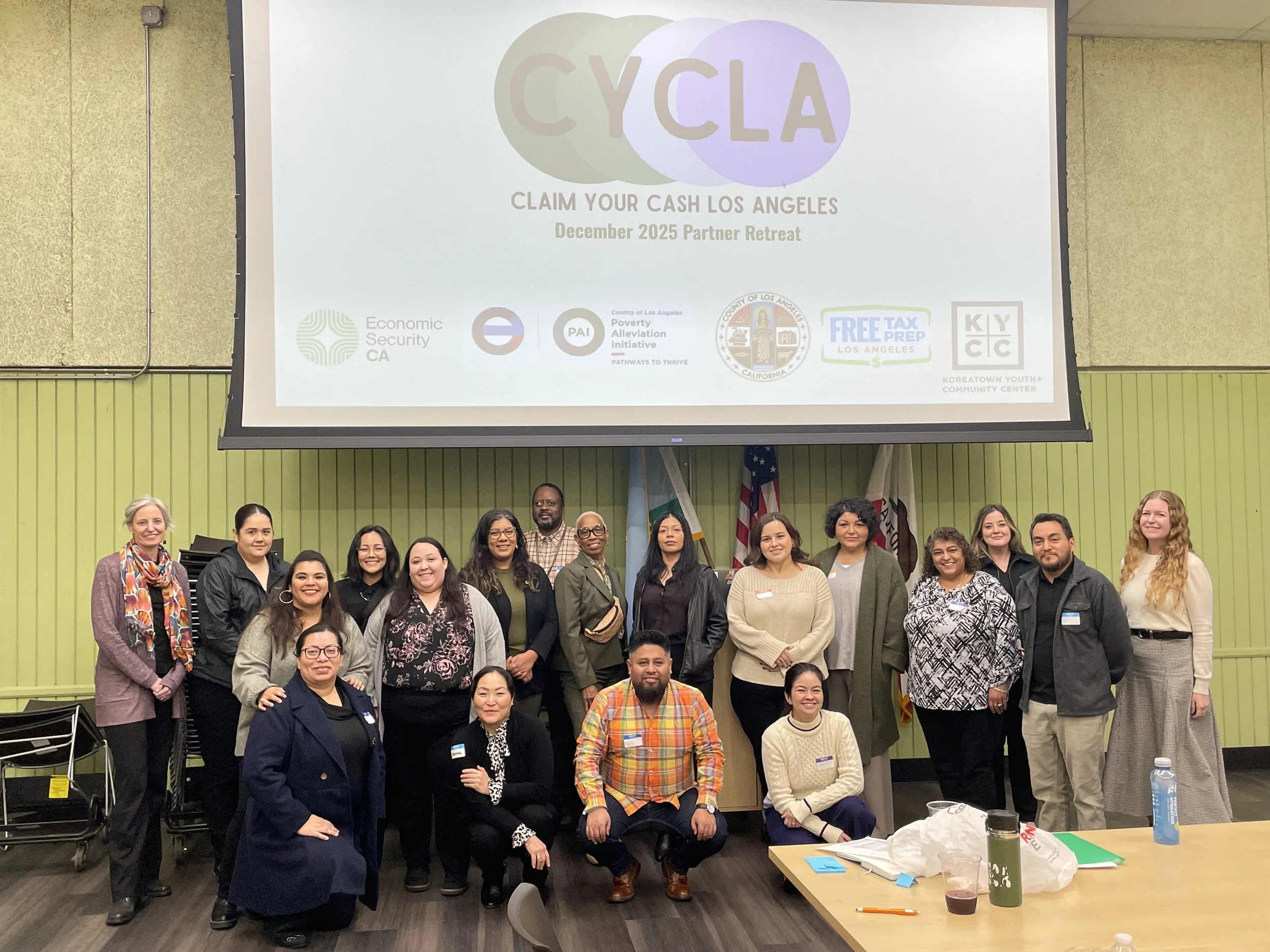
CLAIM YOUR CASH LA PARTNERS MADE IT HAPPEN.
We watched and learned.
Because here's the reality: LA County invested significantly in this initiative. They had executive sponsorship from the CEO's office. They coordinated across multiple departments. They partnered with established VITA providers. They navigated complex data-sharing agreements, developed training materials, organized stakeholder meetings, and troubleshot operational challenges in real time.
It was a massive lift. And it worked! They were able to link low-income Angelenos to an estimated $15 million in tax credits.
But what about smaller counties? Mid-sized cities? States that want to try this at scale? Do they all need to reinvent the wheel, figuring out planning timelines and budget templates and stakeholder engagement strategies from scratch?
Nope. They shouldn't have to.
That's why we created the Toolkit for Coordinated Free Tax Prep Outreach Initiatives. It's a comprehensive guide that walks you through everything you need to replicate this model, whether you're working in a massive county like LA or a much smaller jurisdiction.
The toolkit covers foundational elements like:
securing county-level commitment and assembling your core team
detailed planning timeline so you know what needs to happen when
budget templates, sample agreements, and onboarding materials you can adapt for your context
tips for customizing TaxSlayer (the software many VITA sites use) to enable data tracking
planning tools for individual government departments
But it also gets into the operational details that make or break implementation: how to educate frontline workers and get them actually making referrals, what internal communication channels work best, how to set up on-site tax preparation clinics, what data you need to track and how to collect it.
This toolkit exists because we got to see the whole messy, complicated, ultimately successful process up close. We saw what worked, what didn't, where departments struggled, and what supports made the difference. We talked to county leadership, frontline workers, VITA coordinators, and clients. And we distilled all of it into a resource designed to help you avoid the pitfalls and accelerate the wins.
Could a smaller jurisdiction do this work without LA County's level of investment? Absolutely. You might start with fewer departments, partner with one VITA site, focus on warm handoffs at your highest-touch programs. Getting families the tax credits they've earned is valuable at any scale.
The toolkit gives you the roadmap. You decide what makes sense for your context.
We're thrilled that Economic Security CA gave us the opportunity to create this resource. Tax season comes every year, and every year millions of eligible families don't claim credits they're owed. With benefits being cut across the board, ensuring people get these tax credits matters more than ever.